
Fire-Damaged Asbestos in Townsville
Assess first, keep debris undisturbed and use the appropriate licensed removal pathway.
Licensed QLD removalists · Free on-site quotes · Clearance docs included
Prefer to talk? Call 0422 128 667
Prefer to talk? Call 0422 128 667
How it works. Easy as.
- 1
Fill in the quick form.
A few words is plenty.
- 2
I'll text you within 10 minutes to say g'day and sort out the details.
- 3
We lock in a site visit when it suits you.
A licensed removalist inspects the material and measures up, so your quote is spot on.
- 4
Your written quote lands within 30 minutes of the visit.
Fixed, all-inclusive price. No nasty surprises.
- 5
All good? Say yes.
Flexible payment options are available if money's a bit tight.
- 6
Removal day.
Licensed, WHSQ-approved removalists remove it safely and leave the place tidier than they found it.
- 7
Sorted.
Everything is wrapped, carted off and legally disposed of at a licensed facility such as Townsville's Stuart Waste Facility, with a clearance certificate where required.
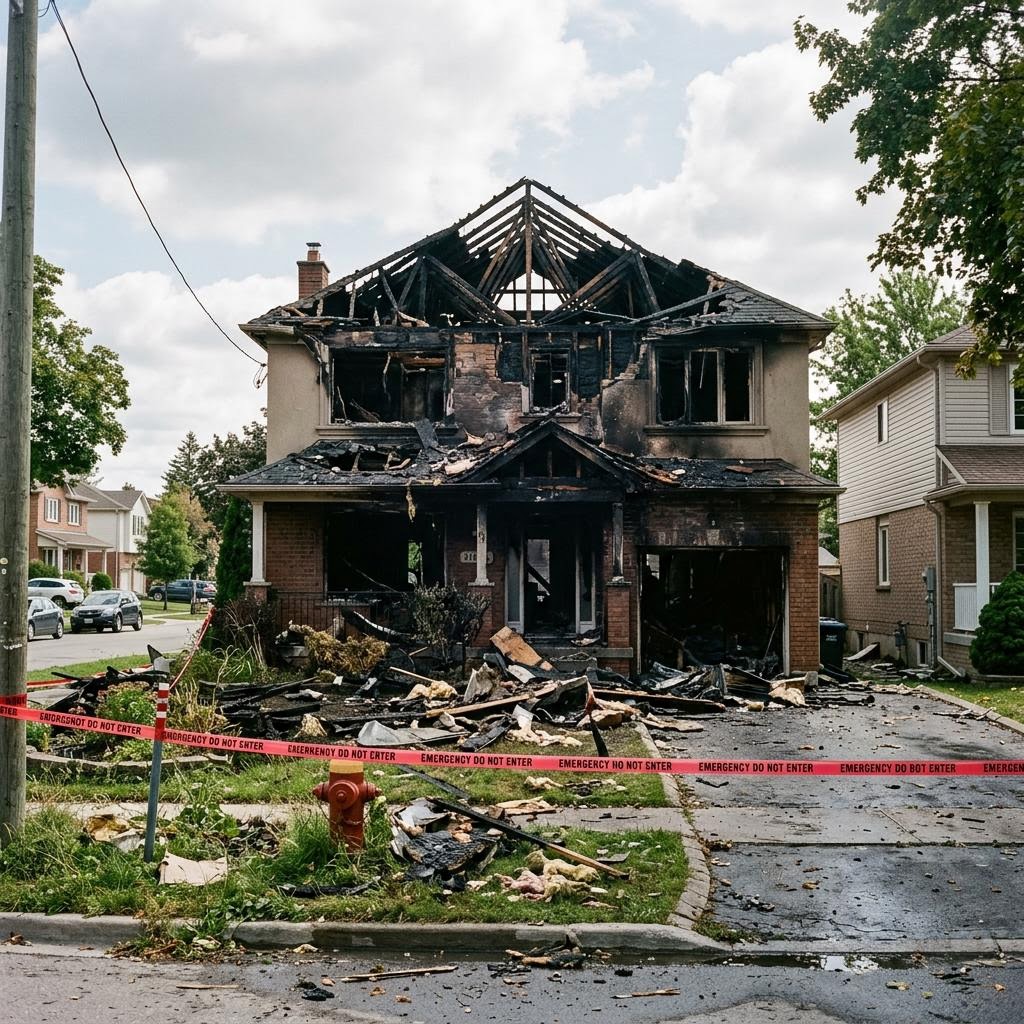
Fire-damaged bonded asbestos cement should be treated as friable and handled by a Class A licensed removalist. Do not start clearing ash, broken sheeting or debris until the property is declared safe and the material has been assessed. Heat can damage the cement bond that normally holds fibres in place, making previously stable material capable of releasing fibres when disturbed.
We can help coordinate the removal scope after a whole-property asbestos assessment, including work that requires friable asbestos removal. See our storm-damage cleanup guidance for general debris precautions.
Why fire changes the material
Fire-damaged bonded asbestos cement should be treated as friable and handled by a Class A licensed removalist. Heat damages the cement bond that normally holds the fibres in place, so material that was stable before the fire can release fibres once disturbed.
Spalling is Queensland's own terminology for the mechanism: asbestos-containing materials crack or spall from the heat generated by a fire. Spalling is when flakes of the material pop off because heat causes a build-up of pressure inside the material, and asbestos fibres are released into the air as it happens.
The real exposure risk is not the fire itself but the cleanup, when ash and debris are moved, swept or demolished.
A fire-damaged pre-1990 home needs assessment before any debris is touched, and that assessment is usually what the insurer wants anyway.
Do not make the site safer by sweeping up visible ash or breaking damaged sheets into smaller pieces. Those actions are part of the disturbance that needs to be avoided.
Safety checklist before fire debris cleanup
Queensland health advice provides a practical starting point for a damaged property:
- •Do not enter a fire, flood or storm damaged property until emergency services or Council say it is safe.
- •Assume any pre-1990 building contains asbestos in its sheeting, roof, eaves, flues and floor underlays.
- •If you must be on site, wear a P2 mask, disposable coveralls, gloves and sturdy boots.
- •Keep debris damp with a fine mist and never use a high-pressure hose.
- •Never dry sweep, never use a household vacuum, never use power tools.
- •Keep children and pets away entirely.
This is not a substitute for an assessment or removal plan. It helps avoid making the debris condition worse while the site is being checked, documented and prepared for the correct licensed work.
Assessment before cleanout or rebuild
It is understandable to want to recover belongings and clear a damaged room quickly. However, moving ash, lifting broken lining or demolishing remaining sheets is precisely where disturbance can occur. The assessment establishes whether asbestos-containing material has been affected and how the cleanout should proceed.
Pre-1990 construction can contain asbestos in more than the visibly damaged roof or wall. That is why a property-wide view is more useful than assuming only the burn area needs attention. It also gives insurers and subsequent trades a defined basis for the next stage of work.
Until the assessment is complete, avoid treating the remaining material as ordinary renovation waste. Do not move it to another part of the block, put it into a skip or attempt to clean ash from its surface. Limiting handling protects the people involved in recovery and avoids complicating the controlled removal that follows.
Our team can discuss the removal work after the assessment, including material that must be handled as friable. We provide a free on-site quote based on the actual site conditions rather than a fixed price over the phone.